
Sample month · Featured Pathway
When sleep goes wrong: four different problems
The wrong frame can waste effort and delay the right help. Telling four kinds of sleep problems apart is one of the most useful ideas in this Pathway.
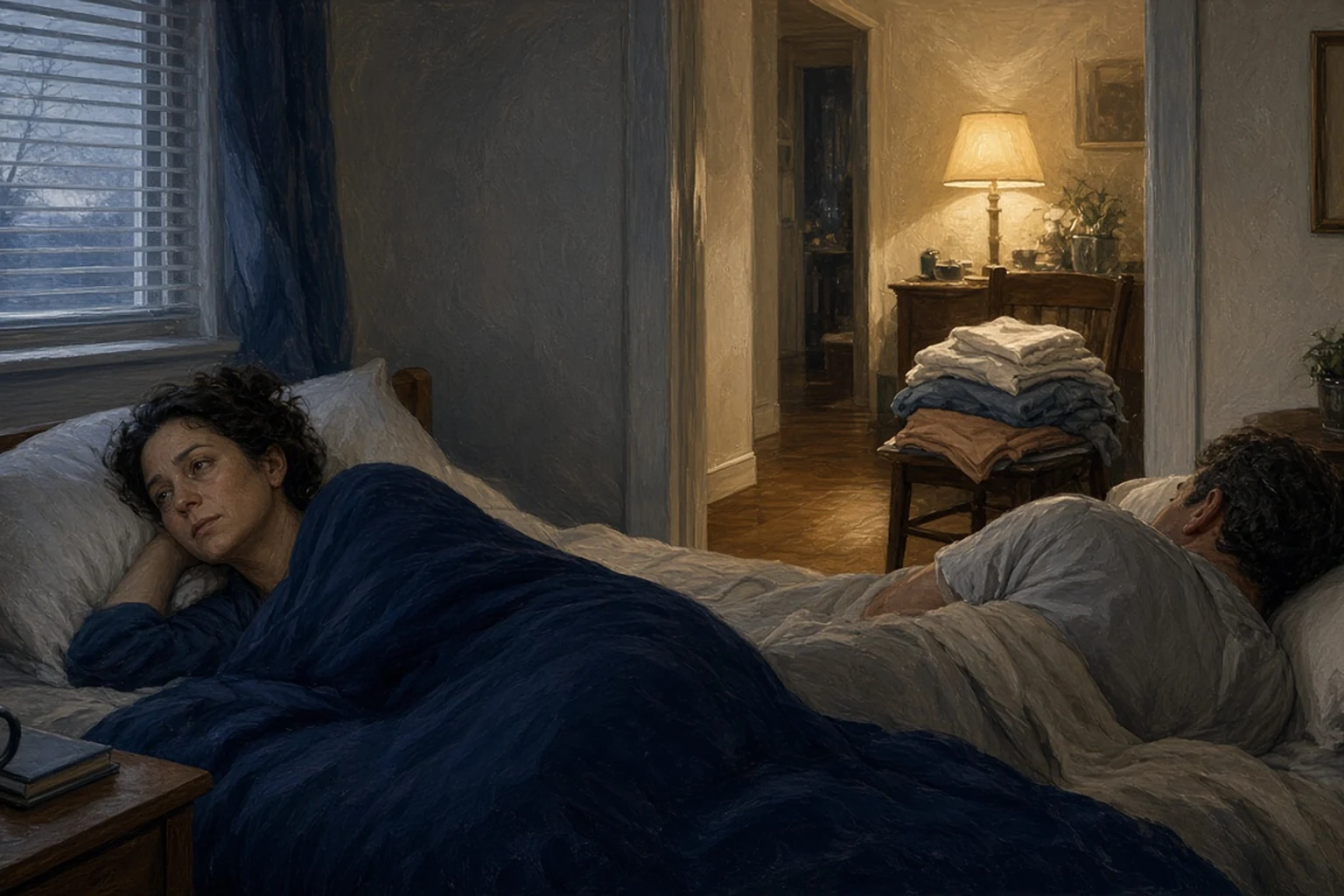
Central question: Why is "a sleep problem" not one thing?
These can overlap
These four types are a thinking tool, not a diagnosis. A person can have more than one at the same time.
People often use one word, insomnia, for any bad night. But sleep can go wrong in at least four different ways. Each one involves a different part of the system you have learned so far:
- not enough time for sleep
- a body clock out of step with your schedule
- insomnia, when sleep is hard even with enough time
- breathing that keeps interrupting sleep
These four types are a thinking tool, not a diagnosis. A person can have more than one at the same time.
1. Not enough time for sleep
Sometimes the sleep system works well but is not given enough room. Work hours, commuting, caregiving, or other demands leave less time for sleep than the body needs. This is called insufficient sleep opportunity.
Not leaving enough time for sleep is a different problem from insomnia. When the opportunity finally comes, sleep itself may come easily.
A fictional example: Dana cares for a family member who needs support several times a night. Between that and an early work start, most nights leave about five hours for sleep. When Dana does get the chance to sleep, Dana usually falls asleep quickly. Dana's schedule leaves too little opportunity for sleep, even though falling asleep is usually easy.
If short sleep leads to sleepiness that feels unsafe, Chapter 6 explains when to talk with a professional.
2. A body clock out of step with your schedule
Here, there may be enough time set aside for sleep, but the body clock's biological night does not line up with when sleep is needed. Night or rotating shifts, jet lag, or a body clock that tends to run late meeting early required hours can all create this kind of mismatch.
Circadian rhythm sleep-wake disorders are problems that happen when the body clock is out of sync with the environment or a needed schedule enough to interfere with daily life. Temporary examples include jet lag and some shift-work schedule conflicts. A schedule clash on its own is not automatically a disorder. This is education about a category, not a personal diagnosis.
A fictional example: Marcus works overnight and gets home in the morning. He has a full block of time to sleep and feels exhausted, yet he keeps waking before midday. A mismatch between his body clock and sleep schedule could help explain this pattern, the "tired but wired" idea from Chapter 2.
When a body clock stays out of step and disrupts work, safety, or daily life, Chapter 6 explains when to talk with a professional.
3. Insomnia
Insomnia means trouble falling asleep, staying asleep, or waking too early, with daytime effects, even when there is enough time for sleep. That last part is what separates it from the opportunity problem above.
Short-term insomnia is common. Stress, schedule or environment changes, and worrying about sleep can raise the chance of insomnia. Causes vary, and more than one factor can be involved. This Pathway does not diagnose why a person cannot sleep.
Chronic insomnia is defined as trouble sleeping at least three nights a week for about three months or longer. That definition is for understanding the term. It is not a waiting period before asking for help.
Insomnia is also more than a habits problem. General sleep tips can be part of healthy routines, but tips alone are not a stand-alone treatment for chronic insomnia. Chapter 6 names the recommended first-line approach.
If trouble sleeping is affecting your daily life, Chapter 6 explains why you do not need to wait before talking with a professional.
4. Breathing that keeps interrupting sleep
Sleep apnea involves repeated breathing pauses or reduced breathing during sleep. In obstructive sleep apnea, the airway becomes blocked. In central sleep apnea, the problem involves the brain's signal to breathe.
Chapter 1 explained that brief awakenings between cycles can be normal. Breathing that repeatedly pauses or slows is different. It can keep breaking up sleep through the night, so hours in bed do not tell the whole story.
Signs can include loud snoring, gasping or choking, pauses in breathing noticed by others, morning headaches, and daytime sleepiness.
Three points are easy to miss:
- Snoring alone does not mean a person has sleep apnea.
- Sleep apnea is not limited to one body type.
- A person may not notice their own breathing pauses until someone else does.
If someone tells you that you snore or gasp for air during sleep, you may want to talk with a healthcare provider. Chapter 6 covers this.
These can overlap
Sleep problem types can overlap or occur together. Someone working night shifts, for example, can also have insomnia or a breathing problem. Other sleep conditions, such as restless legs or narcolepsy, also exist, and a clinician can evaluate them. They are named here only so you know this map is not complete.
Why the type matters
Each type points to a different part of the system. Not enough time is about sleep need and opportunity. A clock out of step is about the two timers and light. Insomnia and breathing problems are about the ability to sleep well once you have the time.
A change aimed at one type may not address another. That is why naming the kind of problem comes before choosing a response. It is also why the next chapter maps familiar influences to the part of the system they act on.
What to remember
"A sleep problem" is not one thing. Not enough time, a body clock out of step with your schedule, insomnia, and breathing that keeps interrupting sleep are different problems with different causes, and they can overlap. The chronic insomnia definition explains a term. It is not a waiting period for help.
Explore this further in the Wellness Library
- Sleep Disorders
This chapter is general health education, not diagnosis or treatment.
Sources for this chapter
- National Heart, Lung, and Blood Institute. Insomnia Diagnosis. Updated March 24, 2022.
- National Heart, Lung, and Blood Institute. Insomnia Causes and Risk Factors. Updated March 24, 2022.
- National Heart, Lung, and Blood Institute. Healthy Sleep Habits. Updated March 24, 2022.
- National Heart, Lung, and Blood Institute. What Are Sleep Deprivation and Deficiency? Updated March 24, 2022.
- National Heart, Lung, and Blood Institute. Circadian Rhythm Disorders. Updated March 24, 2022.
- National Heart, Lung, and Blood Institute. Your Sleep/Wake Cycle. Updated March 24, 2022.
- National Heart, Lung, and Blood Institute. What Is Sleep Apnea? Updated January 9, 2025.
- National Heart, Lung, and Blood Institute. Sleep Apnea Symptoms. Updated January 9, 2025.
- Centers for Disease Control and Prevention. About Sleep. May 15, 2024.
- Edinger JD, et al. American Academy of Sleep Medicine. Behavioral and psychological treatments for chronic insomnia disorder in adults: an American Academy of Sleep Medicine clinical practice guideline. Journal of Clinical Sleep Medicine. 2021;17(2):255-262.